Wednesday, July 16, 2014

The Barefoot Running Fad

We’ve all heard of or at least seen Vibram’s FiveFinger minimalist shoes. Maybe you’ve even tried them. But do you know about the new barefoot running fad? Minimalist running shoes can be a segway into barefoot running or a protective alternative, but the theory behind the two is the same: barefoot/minimalist running can (according to some) help prevent common running injuries while strengthening your ankles, knees, and legs.

According to some researchers, running sneakers, while commonly accepted as the norm, may actually be doing more harm than good. Recent studies have shown that modern running shoes can cause excessive pronation and put extra stress on joints such as knees and hips. They can restrict the natural torsion of the foot and increase the likelihood of heel striking, which is landing directly on the heel when the foot is planted while running.

Running without modern running sneakers, on the other hand, allows for the natural movement of the foot. Barefoot running is, after all, the most natural way for humans to run isn’t it? Think about it: humans have been running for survival for thousands of years, the vast majority of those without today’s Nikes. And there were no podiatrists or physical therapists around centuries ago to help heal Achilles tendon problems or ITB issues; those occupations arose out of need when these running injuries became chronic, which happened around the same time that we as humans began doing everything in sneakers. Without sneakers, the foot tends to heel strike less and land on the forefoot more. This allows for better shock absorption through the stride. Running barefoot, especially on uneven surfaces, also strengthens the feet as well as the legs as a whole.

So, barefoot running seems like an easy fix for all of your running injuries, right? Not quite. While there are many scientists and prominent runners who promote barefoot running, there are still some who are hesitant about it. Depending on what kind of surface you’re running on, running barefoot can lead to cuts and blisters on the bottom of your feet (that’s why minimalist shoes like the FiveFinger are more popular than regular barefoot running).

More importantly, if you jump right into barefoot running it can lead to worse injuries than the ones you might be trying to avoid by running barefoot in the first place. If you’re interested in trying it out, it is important to take baby steps when beginning barefoot running. Add on a few minutes of barefoot running on grass to the end of your run and gradually work up to running more and more time barefoot. Eventually, you’ll be able to do more barefoot running than shod running!

Blog post by Summer 2014 Intern Kim Bolick.

Monday, July 14, 2014

The Concussion Debate


The prevalence of sports related concussions has steadily been on the rise with the increased levels of athletic participation. According to ‘BrainLine.org’ “An estimated 1.6-3.8 million sports- and recreation-related concussions occur in the United States each year. During 2001-2005, children and youth ages 5-18 years accounted for 2.4 million sports-related emergency department (ED) visits annually, of which 6% (135,000) involved a concussion.” Immediate side effects include headaches, dizziness, nausea, vomiting, as well as slurred speech. Some more delayed side effects include memory complaints, noise and light sensitivity, smell and taste disorders, post-concussion syndrome and psychological problems (Mayo Clinic, 2014).

While tuning into the World Cup finale of Germany v. Argentina, there were multiple instances where players faced concussions. This adds to the ongoing debate within the game of soccer as to whether or not headgear should be necessary for all ages. Germany’s Christoph Kramer was involved in a brutal collision with an Argentinian player in the early minutes of the game. Clearly affected by the blast, Kramer was assessed by medical staff members who allowed him to remain in the match until he was unable to physically maintain. In the 56th minute Argentinean Gonzalo Higuain was involved in a rough challenge with goalkeeper Manuel Neuer. Higuain too was shaken up in this collision. So this raises the question as to whether or not headgear should be required in the game of soccer?

Although headgear is not inevitably going to eliminate the risk of concussions or head injuries sustained, it will lessen the severity of the injury. Some may argue that it will change the nature of the game or influence the path of the ball but isn’t the most important aspect of sport to protect our players – especially the children. A brain is rich in development during the childhood years and suffering a concussion alters one’s brain function. Any measure that could potentially protect our brain should be taken and future research should delve deeper into this headgear intervention.

Not only does headgear have physical injury prevention benefits but it may also influence mental health. It is believed that this added protective equipment may improve levels of confidence on the field. When players feel more comfortable on the pitch they are more likely to go into challenges with more effort and grit. As covered by NBC News on an interview focusing on concussion prevention, a woman soccer player stated, “I had extra confidence, extra confidence that allowed me to play more aggressively.” Sports psychologists may even relate this enhanced level of confidence to better performance outcomes.

So there is a decision to be made – purchase the $45 headguard and reduce the probability of a head injury or play the game and take the chance of suffering a full-blown injury?


Collision: http://espn.go.com/video/clip?id=11211372 (0:20 mark, 1:25 mark)

Blog post by Evan Healy.

Wednesday, July 9, 2014

Functional Training

The importance of maintaining a degree of functional fitness is a main determinant in reducing and preventing injury. Integrating functional training into a client’s exercise prescription will improve aspects of coordination and synergism of multiple muscle groups. By intentionally recruiting muscles simultaneously through various planes the client should experience an enhanced sense of proprioception, balance, and overall strength.

Smooth, integrated movements are the basis to all activity, ranging from every day tasks to athletic competition. Implementing functional training will make the performance of everyday activities easier, safer, and more efficient.

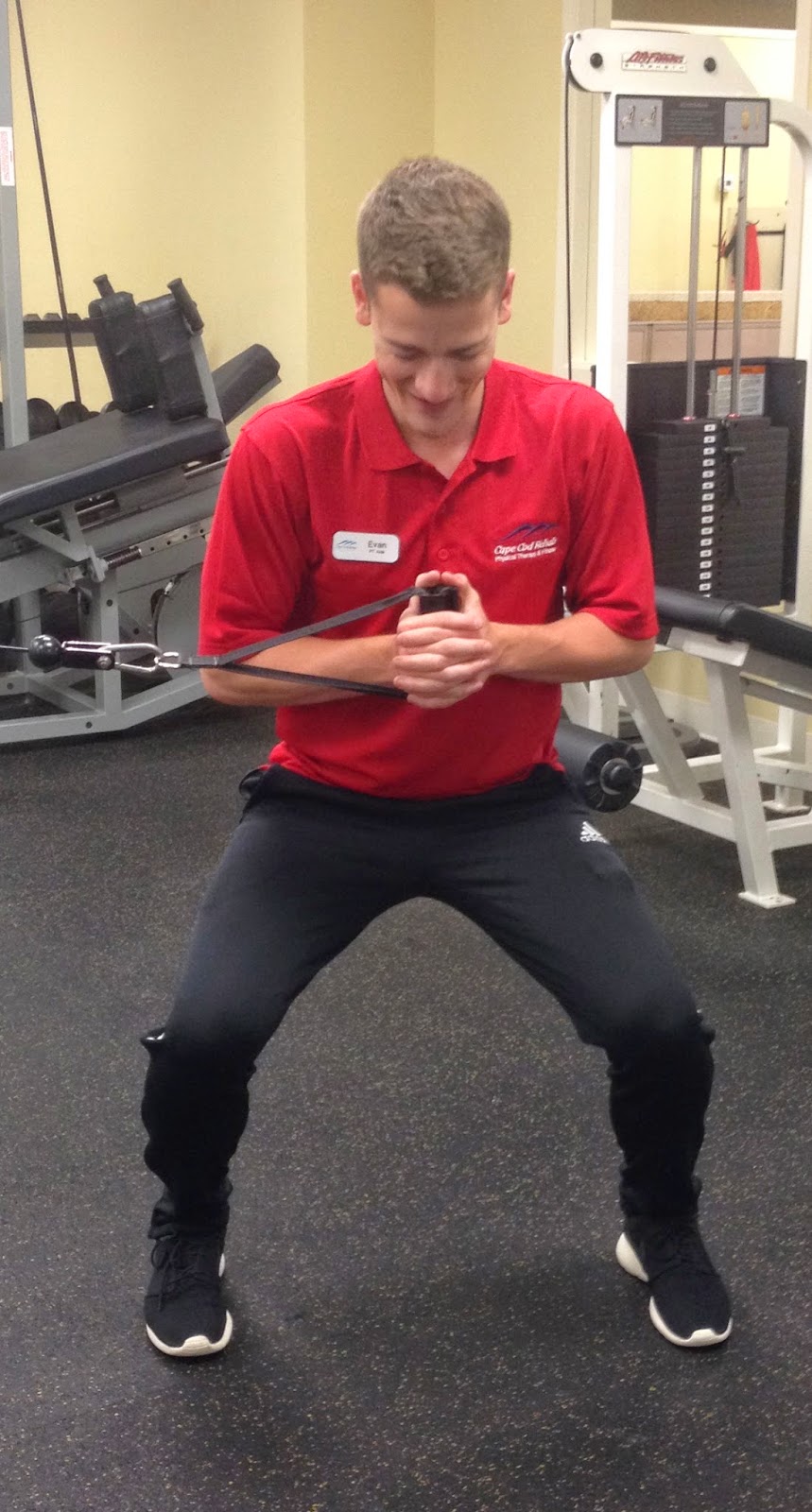
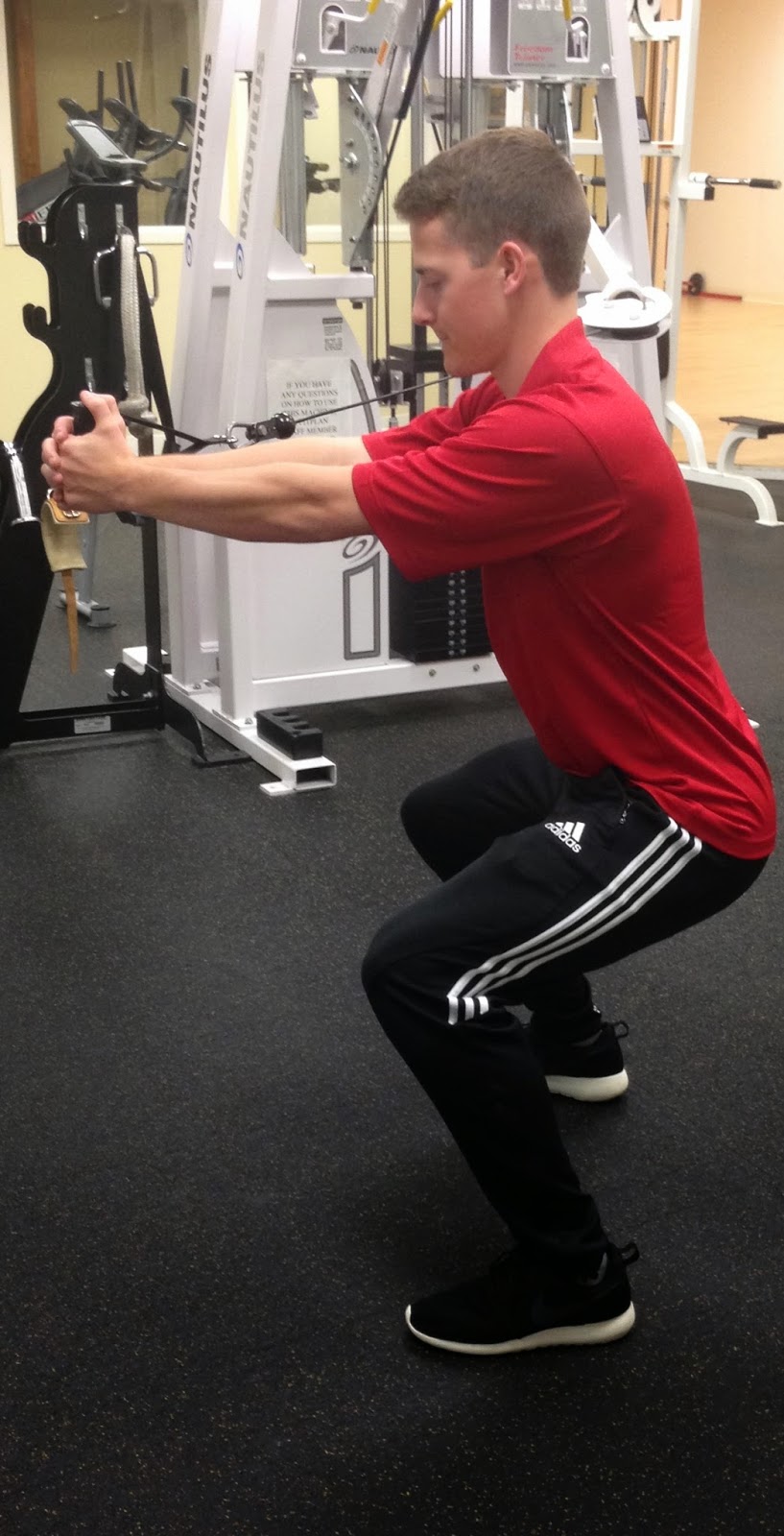
Seeing as the body is considered a ‘kinetic-chain’ we can assume that the significance of the core is of massive importance. The core connects and coordinates movements between the upper and lower body. A great exercise for improving core stability are the variants of the cable pallof press as shown below. This movement again, requires core and anti-rotational strength while recruiting lower body muscles to maintain solid form. The beauty of an exercise like this is that it is easily modifiable and can be performed utilizing a variety of modes including but not limited to resistance bands and cables as well as many positions including a standing, kneeling, squat or split stance lunge position.

The following pictures show examples of the standing press, split stance press, and sustained squat press.

The starting position for each exercise is with hands interlocked and close to the chest, and knees bent in an athletic position. By pressing straight forward you will reach the end position with the arms fully extended. Return back to the chest to complete the repetition.

Standing Pallof Press


Split Stance Pallof Press


Sustained Squat Pallof Press


As with all exercise begin with appropriate repetition and weight ranges while progressing in a proper manner. Start with 2 sets of 10 repetitions on each side. Enjoy the different variations and have fun!

Blog post by Evan Healy.

Saturday, July 5, 2014

Safety Tips for Exercising in the Heat


Summer has just begun and temperatures are rising. Exercising in hot weather puts extra stress on your body. It is important to use precautions to prevent heat-related illnesses:

  • Stay hydrated! Drink plenty of water! Dehydration is a key factor in heat illness. To help your body sweat and cool down, you need to be hydrated. 
    • Rule of Thumb: Do not wait until you’re thirsty to drink fluids. 
    • If you plan to exercise intensely, consider a sports drink to replace the sodium, chloride and potassium you lose through sweating.
  • Watch the weather. Pay attention to the forecasts and heat alerts. Know what the temperature is expected to be for the duration of your planned outdoor activity.
  • Get acclimated. If you’re use to exercising indoors or in cooler weather, take it easy at first when you exercise in the heat so your body can adapt. This takes about two weeks for your body to adapt to exercising in the heat.
  • Dress appropriately. Lightweight, loose-fitting clothing helps sweat evaporate and keeps you cooler. Avoid dark colors, which can absorb heat.
  • Avoid midday sun. Exercise in the morning or evening, when it is likely to be cooler outdoors.
  • Wear sunscreen. A sunburn decreases your body’s ability to cool itself.

Following these simple tips can decrease your risk of developing a heat related illness!


Blog Post by Summer 2014 Intern Ashley LeBlanc.

Tuesday, July 1, 2014

Gym Etiquette

Ahh yes, the gym! 
It’s a place to go to burn off steam, get your frustrations out, and focus on YOU. 

When you’re there you feel like it’s all yours, you own it and you get in the zone but we all have to remember the place we love so much is a shared space. There are written and unwritten rules to gym etiquette. Following these guidelines means a more enjoyable experience for everyone. So let’s do our best to remember the rules.

Equipment and space is shared.

If the gym is quite and space is available, feel free to circuit train all you want. If the gym is busy, be prepared to share and let other people use equipment as well.

Clean up after yourself.

Remove weights from bars when done. Put equipment back where you found it and wipe down your space. Be considerate of other members and help keep a clean and safe environment to workout. Putting things where they belong will make it easier for all to find next time.

Minimize cell phone use.

Stay focused and goal oriented. Be present in your workout. Don’t let your cell phone distract you and others from a successful workout.  If you must take a call, please do so in the designated cell phone areas.

Take care of the equipment.

We all want a gym with nice, functioning equipment so remember to not toss weights around, rest dumbbells on upholstery, or damage things in other ways. If you do find machines or equipment that is broken or damaged, please notify staff so it can be fixed in a timely manner.

Be courteous and help out new members.

Remember that we were all a beginner in a gym at some point. Be courteous to others, offer help if needed. Reaching out to others creates a positive and comfortable environment. Don’t be afraid to seek out a trainer or staff member to assist with questions or schedule a personal training session for more one-on-one attention.

Use locker room etiquette.

Some people are completely comfortable with their body and don’t mind walking about in the nude. However, everyone may not feel this way so covering up with your towel on the way to the shower might not be a bad idea.

Wear appropriate clothing and footwear.

Going to the gym is not a fashion or talent show. Appropriate clothing with sufficient coverage is ideal. Safe and clean sneakers are a good idea as well.

Say no to perfume/cologne.

When you’re at the gym working hard, the last thing you want to do is inhale someone’s overwhelming perfume. Some members are overly sensitive and even allergic to fragrances and have to end their workout early.  Please avoid the spray before hitting the fitness center and especially do not spray perfume in the locker rooms.

If you’re sick, take a day off!

Allergies, the flu, bronchitis or whatever it may be, stay home if you’re sneezing, coughing and spreading germs all over. People take germs and their gym equipment seriously.

Blog post by Farran Jalbert.